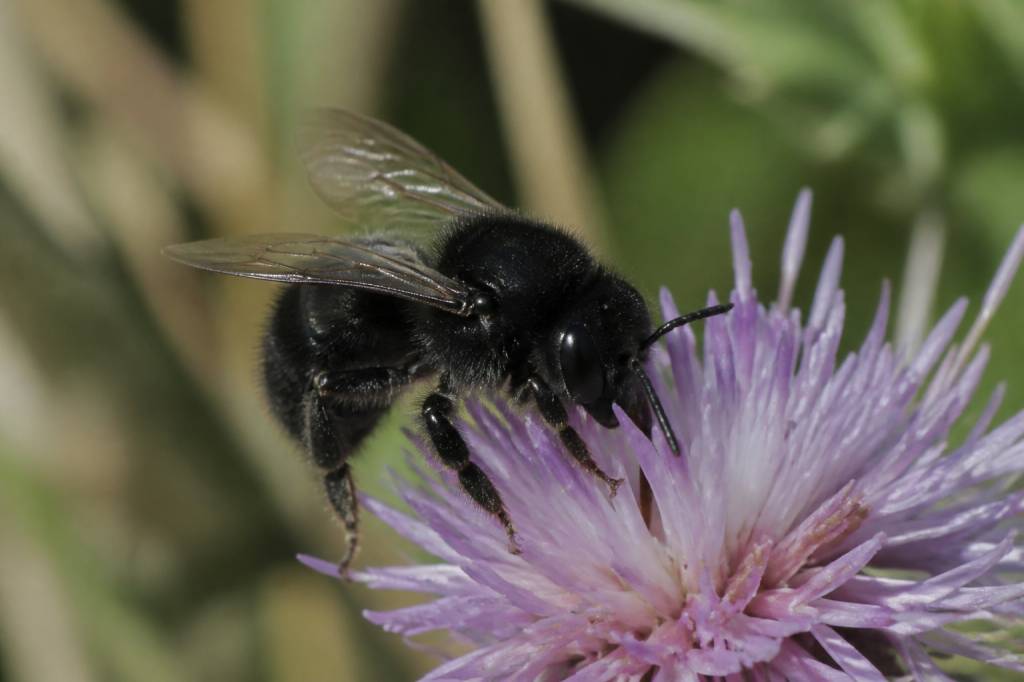
When I first started paying attention to bees properly, I made the same mistake a lot of people do: I assumed a bee was either the familiar fuzzy yellow-and-black garden visitor, or it wasn’t worth worrying about. Then, on a walk along a windy coastal path in the UK, I spotted a small, glossy black bee moving purposefully across a patch of wild thyme. No stripes. No obvious “bee” branding. Just a tiny, determined pollinator doing its job while I stood there looking slightly ridiculous with my field guide open in the rain.
That’s the thing about black bees in the UK: they’re easy to miss, easy to misidentify, and far more important than most people realise. Some are solitary bees, some are bumblebees with very little colour, and some are species that quietly power ecosystems without ever making headlines. If you care about wildlife, gardens, food production, or the health of the wider landscape, these bees deserve your attention.
What do people mean by “black bees”?
The phrase “black bees” isn’t a strict scientific category. It usually describes bees that appear mostly dark or black to the naked eye. In the UK, that can include several different groups:
That matters because not every black bee behaves the same way. Some nest in the ground, some use old walls or dead wood, and some depend on very specific flowers. If we lump them all together, we miss the detail that helps us protect them.
Also, a quick reality check: plenty of black insects are not bees at all. Some flies mimic bees. Some wasps can look bee-like. Nature enjoys a bit of dress-up, apparently.
How to identify black bees in the UK
Identification can feel daunting at first, but you do not need a microscope to notice useful clues. Start with shape, behaviour, and habitat rather than colour alone.
Look for these features:
Some common UK examples include the horned mason bee, which is dark and often seen around spring flowers, and several mining bees, which can appear mostly black and metallic. There are also dark bumblebee species such as the large garden bumblebee queen, which can look nearly all black from a distance depending on the light.
If you are trying to identify one in the wild, ask yourself three questions: Where was it seen? What was it doing? What flowers or nest sites were nearby? That trio tells you more than colour alone ever will.
Where black bees live and nest
One of the biggest misconceptions about bees is that they all live in hives. In the UK, many black bees are solitary, which means each female builds and provisions her own nest. No bustling colony. No queen with an entourage. Just a small but highly efficient operation.
Different black bees favour different habitats, but common nesting sites include:
This is why wild corners matter. A “messy” patch of soil at the edge of a path, an untidy stone wall, or a bit of dead wood in a garden may look insignificant, but to a black bee it can be prime real estate.
On the other hand, heavily managed landscapes can make life hard for them. Over-tidy gardens, sealed soil, intensive mowing, and the removal of dead plant material all reduce nesting opportunities. We often think of neatness as responsible land care, but for pollinators, a little chaos is sometimes exactly what the doctor ordered.
What black bees eat
Like all bees, black bees need nectar for energy and pollen for protein. But not all flowers are equal, and many species are picky in ways that deserve more respect than they get.
Some black bees are generalists and will visit a wide range of flowers. Others are specialists and rely on certain plants, sometimes at specific times of year. Early spring flowers are especially important because many bees emerge when food is scarce.
Good plants for black bees in UK gardens and wild spaces include:
The best bee-friendly spaces are not just about one “pollinator mix” packet from a garden centre. They offer something across the seasons: early bloomers, summer nectar, and late-season fuel. A good habitat is a buffet, not a one-course special.
Why black bees matter so much
Pollinators are often discussed in vague, feel-good terms, but the real value of black bees is practical, ecological, and economic.
First, they help plants reproduce. That includes wildflowers, hedgerow species, trees, and crops. Even bees that are less famous than honeybees can do a huge amount of pollination work, especially in local ecosystems.
Second, they support biodiversity. If a bee species depends on a certain flower, or a certain type of nesting site, its presence is a signal that the habitat still functions. Lose the bees, and you often lose other species too.
Third, they make landscapes more resilient. Diverse pollinator communities are better than relying on one star performer. If one species declines due to disease, weather, or habitat loss, others can help keep the system going.
And yes, there is a human angle too. Healthy pollinator populations support food production, gardens, and the broader economy. That is not sentimental language; it is basic ecological accounting. You can’t eat a spreadsheet, but you can eat the fruit pollinators help create.
The threats black bees face in the UK
Black bees face many of the same pressures as other pollinators, but their habits can make them especially vulnerable. Solitary species often depend on very specific nesting conditions, which makes habitat loss a serious issue.
Main threats include:
It’s easy to assume that any patch of green is automatically good for wildlife. It isn’t. A short, sterile lawn with no flowers is basically a green desert. Beautiful in the same way a waiting room carpet is beautiful.
How to help black bees in your garden or community space
The good news is that helping black bees does not require a country estate or a conservation degree. Small changes can make a real difference, especially when they are repeated across streets, parks, schools, and allotments.
Here’s where to start:
If you manage a shared space, the easiest win is usually communication. Tell people why a patch is left messy. A little sign can transform “neglected” into “purposeful.” We underestimate how much conservation depends on explaining ourselves clearly to neighbours.
How to spot them without disturbing them
Watching bees well means giving them space. You do not need to catch them, shake them, or hover over them like an overexcited wildlife detective.
Try this instead:
That last point is more useful than many people realise. Records from ordinary walkers, gardeners, and nature enthusiasts help build a fuller picture of where bees are thriving and where they are struggling. Conservation is not only for experts in boots and field notebooks.
Why this matters beyond the hedgerow
Black bees are a good reminder that nature is not just about iconic species and dramatic landscapes. Sometimes the most important creatures are the ones most easily overlooked. A dark bee on a wall, a tiny nest in the soil, a spring flower visited by a single forager: these are not small details. They are the working parts of a living system.
If we want a greener, fairer, more resilient future, we have to move beyond vague support for “nature” and start caring about the specific conditions that let wildlife survive. That means reducing chemical use, protecting green corridors, rethinking tidy landscapes, and treating biodiversity as infrastructure rather than decoration.
Next time you see a black bee in the UK, pause for a moment. Notice the way it moves. Notice the flower it chooses. Notice the patch of ground it depends on. Then ask yourself a simple question: if this tiny creature can find what it needs here, what could we do to make the rest of our spaces just as alive?